The Cloud Needs Land: Inside India's Data Center Gold Rush
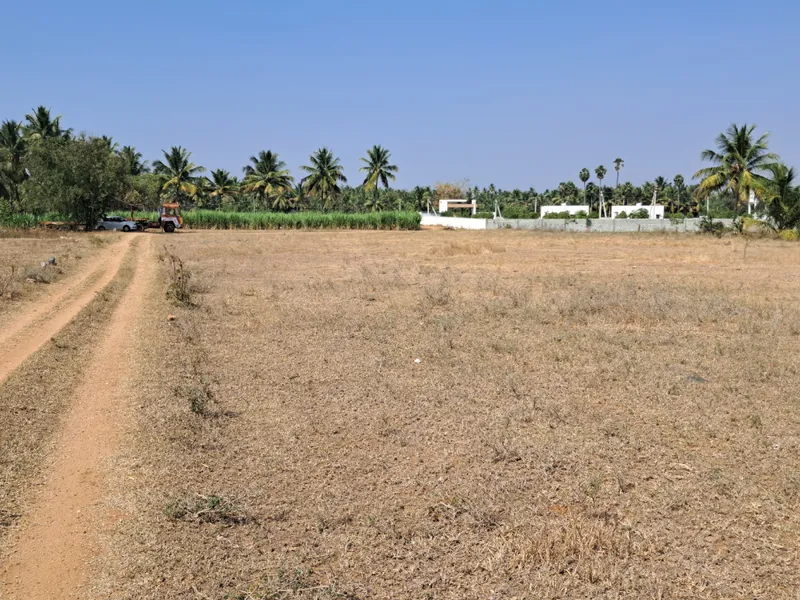
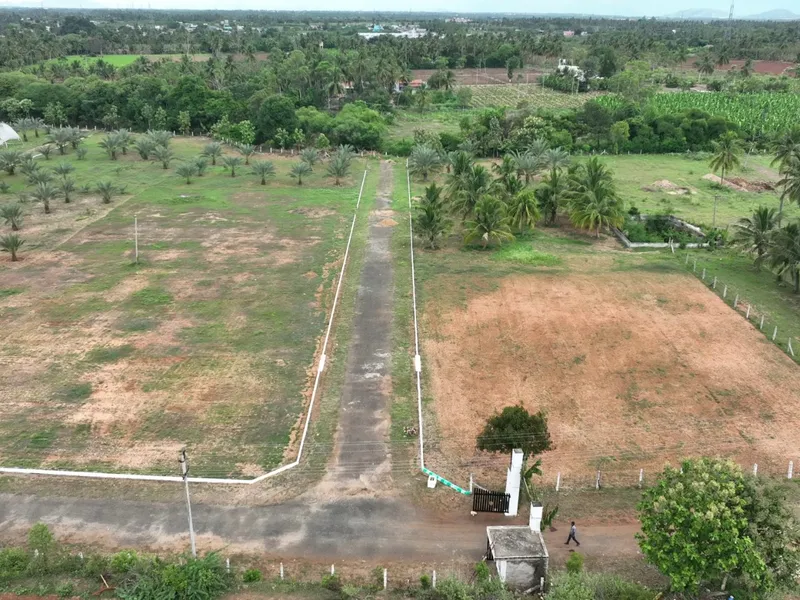
Every Instagram reel, UPI checkout, office cloud backup, and AI prompt feels digital. But the cloud is not floating in the sky. It runs inside giant buildings that need power, fiber, and land. That is why India is seeing a data center land rush.
User demand is still compounding
TRAI data shows India had 1,002.85 million internet subscribers in the quarter ending June 2025. In the same period, total wireless data usage rose to 65,009 petabytes, up from 57,151 petabytes a year earlier. Average monthly usage per wireless data subscriber also rose from 21.48 GB to 24.01 GB.
In plain terms: each user is consuming more data every year. That demand has to be stored, processed, and served from physical infrastructure.
India Wireless Data Use (Quarter Ending June)
Avg monthly usage per wireless data user: 21.48 GB
Avg monthly usage per wireless data user: 24.01 GB
Source: TRAI performance indicators.
India data center stock is scaling fast
JLL's India data center updates show a steep ramp. Capacity was about 350 MW in 2019, reached 854 MW in 2023, and stood at 1,123 MW by H1 2025. JLL projects this to reach 2,073 MW by 2027.
This is a real estate story. More megawatts require more technical floor area, utility yards, and expansion-ready land.
India Data Center Capacity Ramp (MW IT Load)
Source: JLL India data center update.
Location is not random
CBRE's 2025 market update shows a concentrated pattern. Mumbai holds 53% of India's operational data center capacity, followed by Chennai (20%), Delhi-NCR (10%), and Bengaluru (7%).
CBRE also links Mumbai's lead to proximity to major internet exchange points and global submarine cable entry routes.
Why cables matter: the ITU (International Telecommunication Union) says more than 99% of international data traffic travels through submarine cables.
India Capacity Share by City (9M 2025)
Source: CBRE 2025 market update.
Power is now a location moat
Data centers are power-heavy assets. The International Energy Agency estimates global data center electricity demand at around 415 TWh in 2024, rising to about 945 TWh by 2030.
Global Data Center Electricity Demand (TWh)
2024
415 TWh
2030 (Base)
945 TWh
Source: IEA energy and AI report.
This is why site selection has shifted from "cheap land" to "power-and-fiber-ready land." Reliable supply and upgrade headroom are becoming core valuation drivers.
Here is the hidden multiplier industrial buyers often miss. A 50 MW data center campus may need roughly 5 to 10 acres for the building, but utility-scale solar projects typically need around 4 to 7 acres per MW. So a comparable 50 MW renewable procurement can imply around 200 to 350 acres somewhere else in the system.
Important nuance: the data center operator does not always buy this land directly. In many cases, an independent renewable developer buys or leases it and supplies power through open-access PPA (Power Purchase Agreement) contracts. But the land demand still shows up upstream.
Hidden Land Multiplier (50 MW Example)
Campus land
5 to 10 acres
Physical data center footprint
Solar land
200 to 350 acres
Off-site utility-scale renewable footprint
Multiplier
~20x to ~70x
System-level land intensity
AI is the accelerator, not just another workload
The IEA is explicit here: AI is now the most significant driver of data center electricity growth, and electricity demand from AI-optimised data centers is projected to more than quadruple by 2030.
In the IEA base model, accelerated servers (which mainly run AI-heavy compute) account for almost half of the net increase in global data center electricity demand to 2030.
India is also scaling compute supply quickly. A PIB factsheet, says national AI compute capacity crossed 34,000 GPUs by May 2025, versus an initial policy target of 10,000 GPUs under IndiaAI Mission.
AI-Optimised Data Center Electricity Demand (Index)
2024
Base year
2030
More than 4x (IEA lower-bound visualization)
Source: IEA energy and AI report.
Who Drives the Net Increase in Data Center Power Demand (to 2030)
Almost half of net increase
Around one-fifth
Around one-fifth
Around one-tenth
Source: IEA energy and AI report.
What should buyers track now?
- Power readiness: substation proximity, upgrade plans, and outage history matter more than brochure language.
- Fiber density: distance to network backbones and exchange routes can change commercial viability.
- Policy clarity: states with clean approvals and data-center incentives tend to attract faster deployments.
- Execution proof: track commissioned MW, not only announced MoUs (Memoranda of Understanding).
This is the same pattern we covered in our broader macro piece on institutional land repricing. Read that explainer.
What can go wrong?
- Grid bottlenecks can delay commissioning even after land is acquired.
- Capital cycles and cloud-spend slowdowns can postpone expansion plans.
- Not every parcel near a hot zone rerates. Access, zoning, and utility constraints still decide outcomes.
Bottom line
The cloud is becoming one of India's biggest physical real-estate stories. If user demand keeps compounding, the winners will be locations that combine power, fiber, and execution speed, not just low headline land prices.